
Everything you need to know about hiring concrete ballast from Blok Logic. We serve the Events, Hoarding and Commercial Property sectors across the South East of England, with flexible hire terms and full delivery and collection included.
General & Hiring
What is concrete ballast and how does it work?
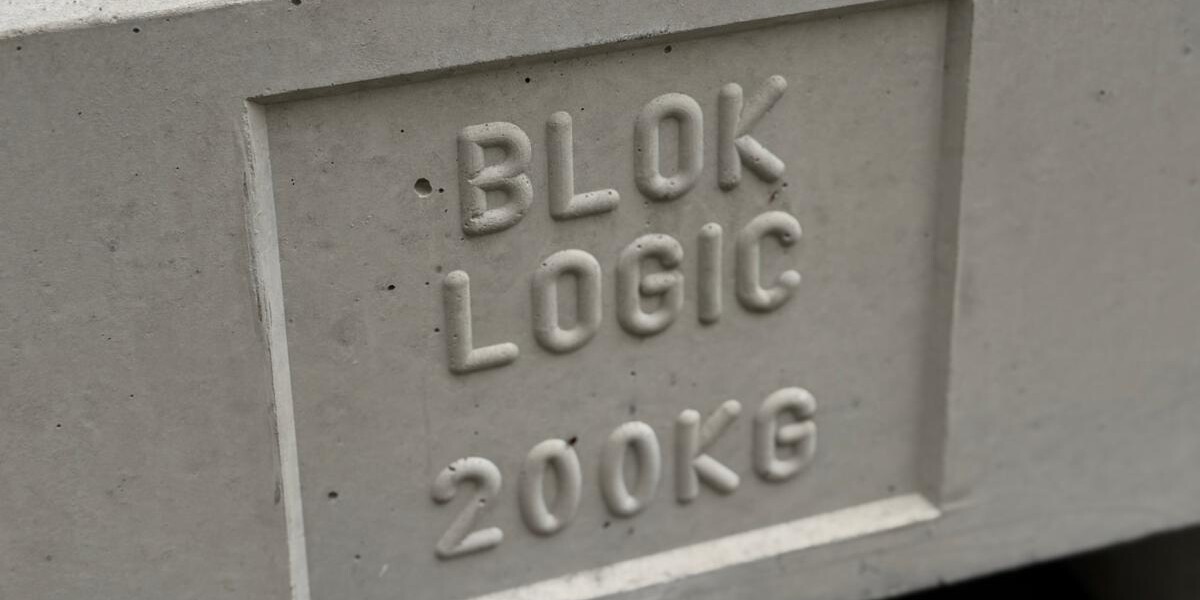
Concrete ballast blocks are heavy-duty interlocking or stackable precast concrete units used to provide weight and stability to temporary structures. They act as a counterweight or barrier, holding fencing, hoarding, stages, and other structures firmly in place without the need for ground anchoring or excavation.
What areas does Blok Logic cover for concrete ballast hire?
Blok Logic delivers and collects concrete ballast across the South East of England, including London, Kent, Surrey, Sussex, Essex, and Hampshire. If you’re unsure whether we cover your location, contact us directly and we’ll confirm availability for your site.
How do I get a quote for concrete ballast rental?
You can request a quote via our website at bloklogic.co.uk or by calling us directly. To give you an accurate price, it helps to know your location, the number of blocks required, the duration of hire, and your intended application — whether that’s event barriers, hoarding support, or commercial use.
What is the minimum hire period for concrete ballast blocks?
We offer flexible hire terms to suit your project, from single-day event hire through to long-term site contracts lasting months. Our team will work with you to match the hire period to your project timeline so you’re only paying for what you need.
Does Blok Logic provide delivery and collection of the blocks?
Yes. Blok Logic handles full delivery and collection across the South East. Our drivers are experienced in site access requirements and can coordinate delivery times to fit around your operational schedule. Blocks are transported on specialist vehicles and positioned using a crane-mounted vehicle or Moffett forklift where needed.
How much do concrete ballast blocks weigh and what sizes are available?
Our concrete ballast blocks are available in a range of sizes, typically weighing between 500kg and 2,000kg per block. The most common sizes are 1-tonne and 2-tonne interlocking blocks, which can be stacked or arranged in configurations to meet your load and stability requirements. Contact us to discuss which specification suits your project.
Events Sector
Can concrete ballast blocks be used as event barriers or crowd control?
Absolutely. Concrete ballast blocks are widely used at festivals, concerts, sporting events, and public gatherings to create secure perimeter boundaries, vehicle exclusion zones, and crowd management barriers. Their mass makes them highly effective as hostile vehicle mitigation (HVM) barriers where security is a priority.
Are concrete ballast blocks suitable for outdoor events on grass or soft ground?
Yes, though ground conditions do need to be assessed beforehand. On soft or uneven ground, we may recommend using spreader plates or matting underneath the blocks to distribute the load and prevent sinking. Our team can advise on the best placement approach during the quotation stage.
How quickly can Blok Logic deliver concrete ballast for an event?
We understand that event logistics can be time-sensitive. We aim to accommodate short lead times wherever possible and can often deliver within 24–48 hours for sites across the South East. For large-scale events, we recommend booking as early as possible to guarantee availability and scheduling.
Can ballast blocks be used to ballast temporary structures like stages or marquees?
Yes. Concrete ballast blocks are an effective alternative to ground anchoring for temporary structures where driving stakes into the ground isn’t possible — for example, on hard standing, over underground infrastructure, or on protected surfaces. They are commonly used with stages, towers, marquee frames, and temporary roofing structures.
Hoarding Sector
What type of hoarding can concrete ballast blocks support?
Ballast blocks are suitable for use with a wide range of hoarding systems including steel Heras fencing, timber hoarding panels, anti-climb barriers, and branded construction hoardings. They provide a stable weighted base without the need for fixings into the ground or existing structures.
Why use concrete ballast instead of water-filled barriers for hoarding?
Concrete ballast blocks offer significantly greater mass and stability than water-filled plastic barriers, making them better suited for long-term hoarding applications and wind-exposed locations. They don’t degrade in freezing temperatures, won’t crack if punctured, and provide a more robust security deterrent — particularly important around construction sites and high-footfall areas.
Can concrete ballast blocks be used on public footpaths or roads near construction sites?
Yes, but placement on public highways or footpaths will typically require a licence from the relevant local authority or highways department. Blok Logic can advise on the logistics, and it is the responsibility of the site operator to obtain any necessary permits before the blocks are deployed in public areas.
Are the blocks suitable for long-term hire on construction hoardings?
Concrete ballast is ideally suited to long-term construction site hoarding. Unlike plastic or timber solutions, precast concrete does not degrade, warp, or require maintenance over extended periods. Blok Logic offers competitive long-term hire rates and can adjust or reposition blocks as the site footprint changes throughout your project.
Commercial Property
How can concrete ballast blocks be used in commercial property settings?
In commercial property, concrete ballast blocks are used for a variety of applications including securing temporary car park segregation, creating loading bay delineation, anti-ram protection at building entrances, rooftop ballasting for solar panel or plant installations, and site demarcation during refurbishment works.
Can concrete blocks be used as anti-ram or hostile vehicle mitigation on commercial sites?
Yes. Heavy concrete ballast blocks are increasingly used as a cost-effective hostile vehicle mitigation (HVM) measure for commercial premises. Their sheer mass makes them effective at preventing vehicle intrusion into pedestrian areas, building entrances, and outdoor dining or retail zones — particularly where permanent bollard installation is not viable.
Is planning permission required to place concrete ballast blocks on private commercial land?
In most cases, planning permission is not required for the temporary placement of concrete ballast blocks on private land, as they are not permanent structures. However, if blocks are to be placed on or adjacent to a public highway, consent from the local authority or Highways England may be needed. We always recommend checking with your local planning department if you are uncertain.
Can concrete ballast blocks be used on rooftops for plant or solar installations?
Yes, though a structural survey of the roof must be completed before installation to ensure it can bear the load. Rooftop ballast blocks are commonly used to secure solar panel arrays, air conditioning units, and telecoms equipment without penetrating the roof membrane. Blok Logic can supply appropriately sized blocks and advise on layout to distribute weight evenly.
Safety, Logistics & Sustainability
Are there any health and safety requirements for handling or positioning ballast blocks?
Yes. Due to their weight, concrete ballast blocks must only be lifted and placed using appropriate mechanical handling equipment such as a crane, Hiab lorry, or telehandler. Blok Logic handles all delivery positioning as part of our service. On-site operatives should not attempt to manually reposition blocks and should ensure exclusion zones are maintained during all lifting operations.
Is renting concrete ballast more sustainable than purchasing new blocks?
Renting is significantly more sustainable than purchasing. By hiring from Blok Logic, the same blocks are reused across multiple projects, reducing the demand for new concrete production — one of the more carbon-intensive manufacturing processes. Hiring also eliminates the need for disposal at the end of your project, keeping materials in a circular use cycle for as long as possible.